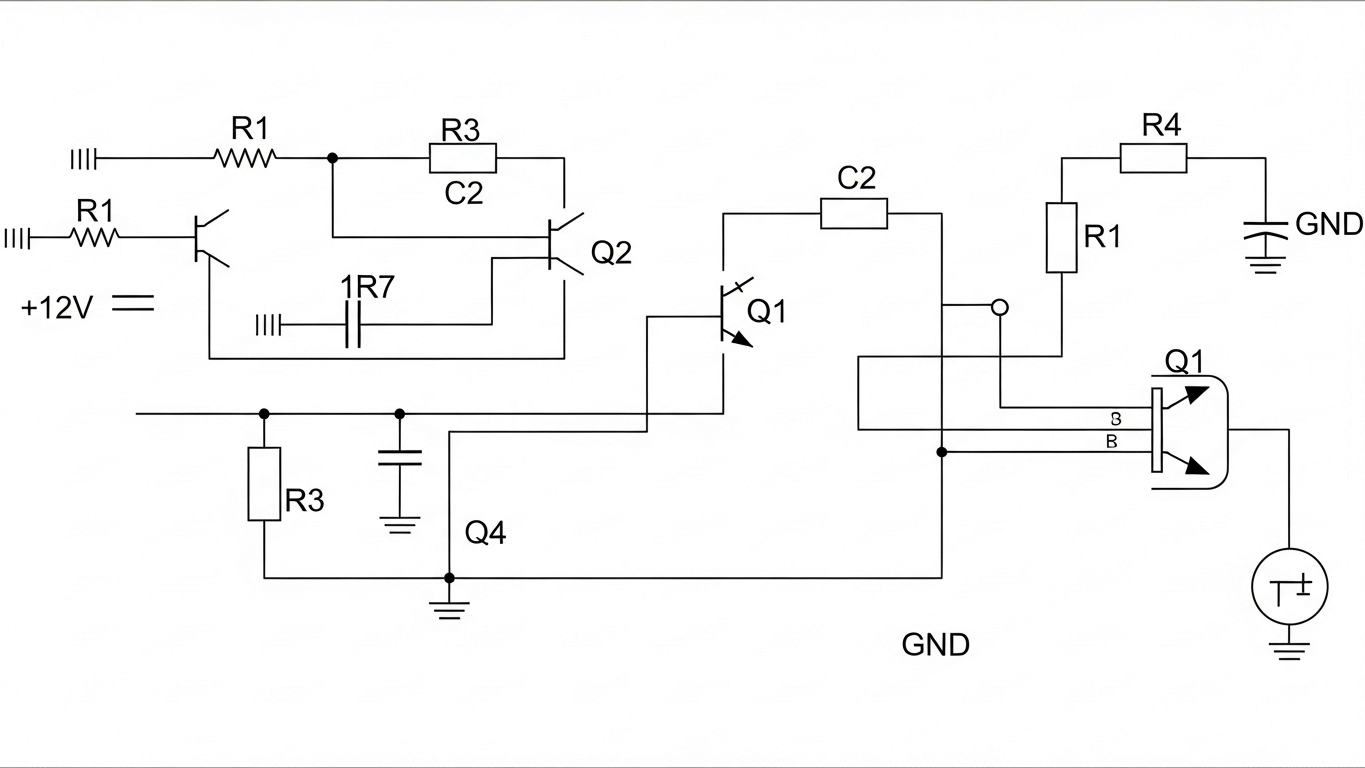
Understanding your Toyota's onboard diagnostics system is crucial for any owner who wants to take a more active role in their vehicle's maintenance. At the heart of this system lies the Toyota Obd2 wiring diagram, a detailed roadmap that guides you through the connections and communication pathways that allow your car to report its health and any potential issues. This diagram is your key to deciphering those cryptic engine lights and ensuring your Toyota runs smoothly.
Demystifying the Toyota Obd2 Wiring Diagram
A Toyota Obd2 wiring diagram is essentially a technical blueprint that illustrates how the On-Board Diagnostics II (OBD-II) system is wired within your specific Toyota model. This system, mandated by law in many countries, allows for standardized communication between your vehicle's computer and external diagnostic tools. The diagram shows you the physical location of the OBD-II connector, the pinout of that connector, and how each pin is connected to various sensors, modules, and the vehicle's main computer (ECU). Without this visual guide, interpreting the flow of data and troubleshooting problems would be a significantly more challenging endeavor.
The primary use of a Toyota Obd2 wiring diagram is to facilitate diagnostic procedures. When your check engine light illuminates, a mechanic or a DIY enthusiast will connect an OBD-II scanner to the diagnostic port. The scanner communicates with the ECU, retrieving diagnostic trouble codes (DTCs) that point to the nature of the problem. The wiring diagram then becomes invaluable for tracing the specific circuits associated with these codes. For example, if a code relates to an oxygen sensor circuit, the diagram will show you precisely which wires from the sensor lead to the ECU and where any potential connection points or grounds are located. This allows for targeted inspection and repair, saving time and reducing guesswork. The importance of having the correct wiring diagram for your specific Toyota model cannot be overstated , as pin assignments and circuit layouts can vary between different year models and even trims.
Here are some key components and their representation on a typical Toyota Obd2 wiring diagram:
- OBD-II Connector (DLC): The physical 16-pin connector found usually under the dashboard.
- ECU (Engine Control Unit): The vehicle's main computer, responsible for managing engine functions and communicating diagnostic data.
- Sensors: Various sensors throughout the engine and emissions system (e.g., oxygen sensors, mass airflow sensors, throttle position sensors).
- Actuators: Components that perform actions based on ECU commands (e.g., fuel injectors, ignition coils).
- Communication Lines: Wires dedicated to transmitting data between the ECU and the OBD-II port, often following standardized protocols like CAN bus.
Understanding these elements and their connections, as depicted in the diagram, is fundamental for effective troubleshooting and maintenance of your Toyota.
To truly empower yourself in understanding and diagnosing your Toyota's needs, it is essential to consult the comprehensive resources available. The following section provides the detailed information you require.